
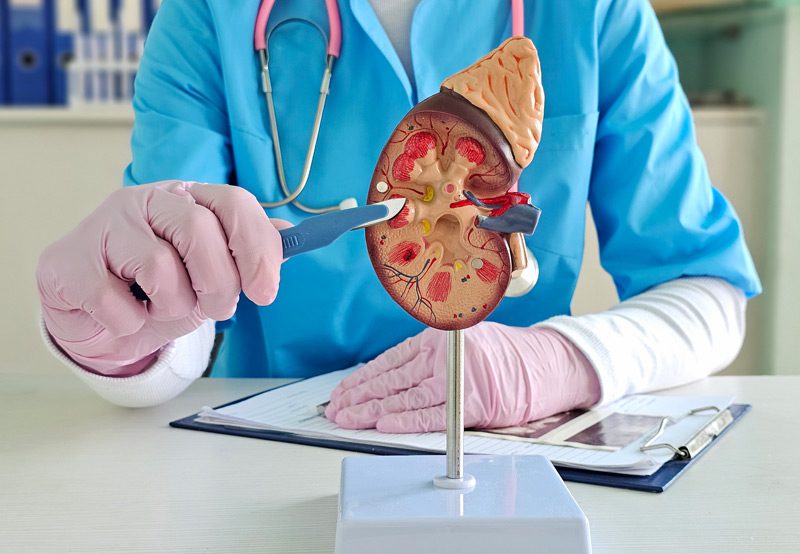
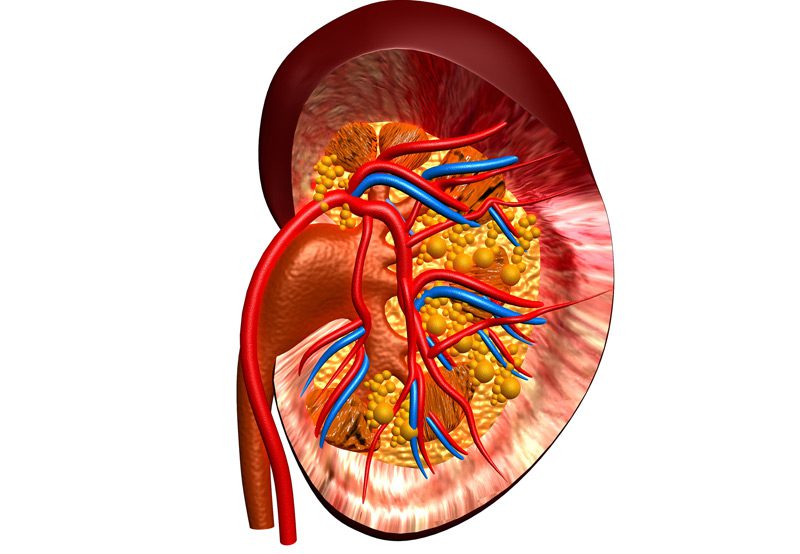
Robotic-assisted partial nephrectomy is a minimally invasive surgical procedure used to remove a kidney tumor while preserving the healthy portion of the kidney. This technique is commonly recommended for patients with small to moderately sized kidney tumors, especially when cancer is confined to a specific region of the kidney. By using robotic technology, surgeons are able to perform precise and delicate operations with minimal disruption to surrounding tissue.
When Is Robotic-Assisted Partial Nephrectomy Recommended?
This procedure is typically used in the treatment of:
- Localized Kidney Cancer: Tumors that are confined to one area of the kidney
- Benign Kidney Masses: That require removal due to growth or symptoms
- Hereditary Kidney Cancer Syndromes: Where kidney preservation is critical
- Bilateral Kidney Tumors or Solitary Kidney: When maintaining kidney function is essential

Diagnosis and Preoperative Evaluation
Before surgery, your urologist will evaluate your condition with:
- Imaging Tests: CT scans or MRIs to assess tumor size, location, and proximity to blood vessels
- Blood Tests: To measure kidney function and overall health
- Urinalysis: To detect abnormalities in kidney filtration or infection
- Staging (if cancer is suspected): To rule out spread beyond the kidney
The Procedure: What to Expect
Robotic-assisted partial nephrectomy is performed under general anesthesia. The surgeon uses robotic arms to control laparoscopic instruments with high precision. The key steps include:
- Positioning and Access: The patient is placed in a side-lying position, and small incisions are made in the abdomen for instrument access
- Tumor Identification: The kidney is carefully exposed and the tumor located using real-time imaging
- Temporary Clamping: Blood flow to the kidney may be temporarily clamped to limit bleeding during tumor removal
- Tumor Resection: The tumor is carefully excised while sparing as much healthy kidney tissue as possible
- Reconstruction: The remaining kidney tissue is sutured and the blood supply is restored
- Specimen Removal: The tumor is removed through a small extraction site
Recovery and Outcomes
- Hospital Stay: Most patients stay 1–3 days in the hospital
- Postoperative Pain: Typically mild and managed with oral medications
- Return to Activity: Light activity can resume within a week, with full recovery expected in 4–6 weeks
- Kidney Function Monitoring: Follow-up labs and imaging are used to ensure the remaining kidney is functioning well
Benefits of Robotic Assistance
- Precision: Enhanced dexterity and visualization for removing complex tumors
- Smaller Incisions: Less pain, reduced scarring, and quicker recovery
- Kidney Preservation: Maximizes functional kidney tissue, which is important for long-term health
Risks and Considerations
- Bleeding, infection, or urine leakage from the surgical site
- Rare risk of conversion to open surgery if complications arise
- Need for follow-up imaging to monitor for recurrence
Next Steps
If you’ve been diagnosed with a kidney tumor or are being evaluated for kidney cancer, robotic-assisted partial nephrectomy may offer a safe and effective option that balances cancer control with kidney preservation. Your urologist will help determine whether this approach is appropriate based on imaging, tumor characteristics, and your overall kidney function.